
Imagine the universe as a vast, magnificent building. We can see the stars, the galaxies, the planets – the furniture and decorations, if you will. But what if the building itself, the very structure holding everything together, was invisible? That, in essence, is the puzzle of dark matter.
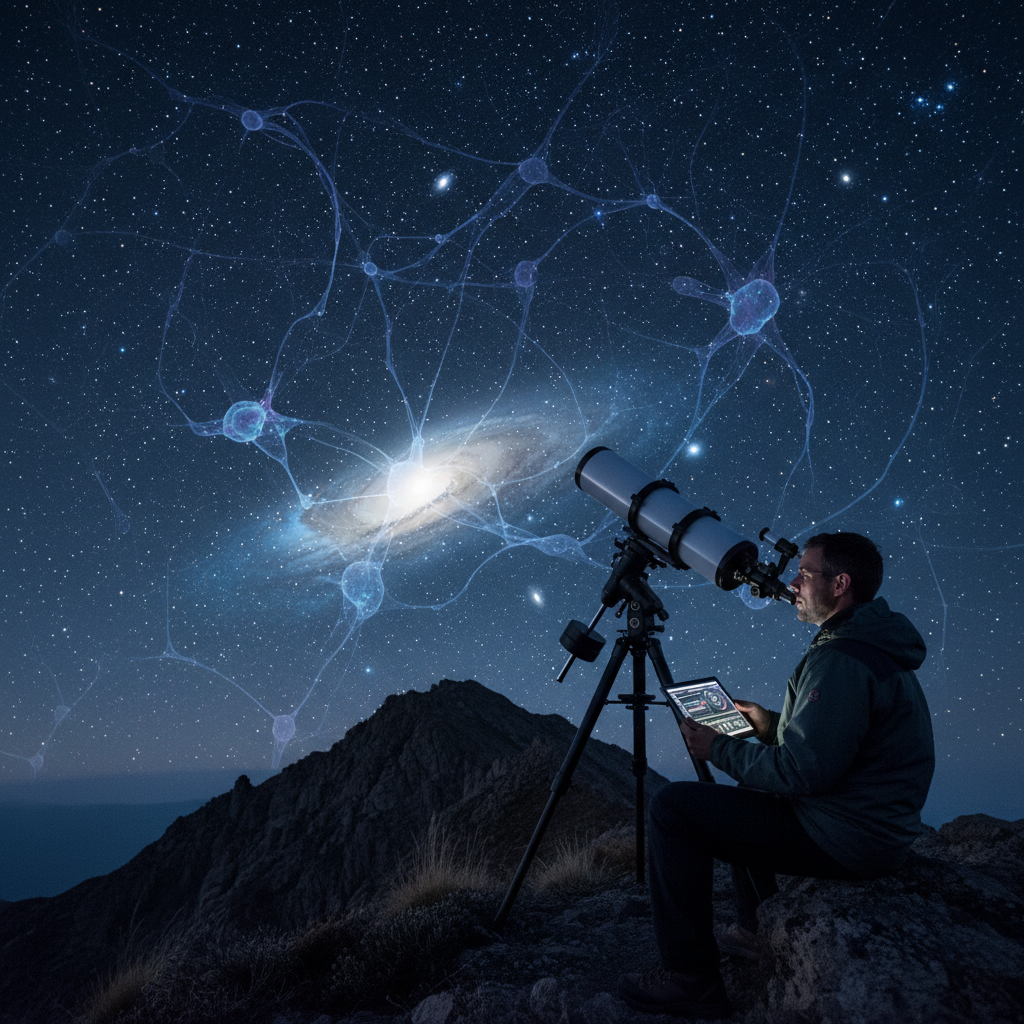
For decades, astronomers and physicists have observed the universe behaving in ways that defy explanation based on the visible matter we know. Galaxies spin faster than they should, gravity acts stronger than expected, and the very fabric of the cosmos seems to be shaped by something we cannot see. This “something” is what we call dark matter. It’s the silent, unseen architect of the universe, and understanding it is one of the greatest challenges facing modern science.
The Evidence: Seeing the Unseen
The first hints of dark matter emerged in the 1930s. Astronomer Fritz Zwicky, while studying the Coma Cluster of galaxies, noticed something peculiar. The galaxies within the cluster were moving far too rapidly to be held together by the visible matter alone. He hypothesized that there must be some unseen mass, some “dunkle Materie” (dark matter), providing the extra gravitational pull needed to keep the cluster from flying apart. Initially, his idea was met with skepticism, but further observations steadily strengthened the case for dark matter.
Rotation Curves of Galaxies: One of the most compelling pieces of evidence comes from the rotation curves of spiral galaxies, like our own Milky Way. We can measure how fast stars and gas clouds orbit the galactic center. Based on the amount of visible matter, the orbital speed should decrease with distance from the center, much like planets orbiting the Sun. However, observations show that the orbital speed remains relatively constant, even at the outer edges of galaxies. This implies that there is a significant amount of unseen mass – dark matter – extending far beyond the visible disk, providing the extra gravity needed to maintain these high speeds.
Gravitational Lensing: Einstein’s theory of general relativity predicts that massive objects can bend the path of light. This phenomenon, known as gravitational lensing, allows us to “see” the distribution of mass, even dark matter. By observing how the light from distant galaxies is distorted by the gravity of intervening galaxies or galaxy clusters, we can map out the total mass, including both visible and dark matter. These maps consistently reveal that there is much more mass present than can be accounted for by the visible matter alone. The way light bends around massive objects, such as galaxies or galaxy clusters, provides further evidence for the existence of dark matter. This bending, or gravitational lensing, allows astronomers to “see” the distribution of mass, including dark matter, and study its effects on the surrounding universe.
The Cosmic Microwave Background (CMB): The CMB is the afterglow of the Big Bang, a snapshot of the early universe. The tiny fluctuations in the CMB provide a wealth of information about the composition and evolution of the universe. Analysis of the CMB data indicates that dark matter makes up about 85% of the total matter in the universe. In the early universe, dark matter’s gravitational influence shaped the initial density fluctuations that eventually grew into the large-scale structures we observe today: galaxies, clusters of galaxies, and the cosmic web.
What is Dark Matter? The Candidates
If we can’t see it, what *is* dark matter? That’s the multi-billion-dollar question (or rather, the question that has cost billions in research). Despite decades of searching, the exact nature of dark matter remains a mystery. However, several leading candidates have emerged:
- Weakly Interacting Massive Particles (WIMPs): WIMPs are hypothetical particles that interact with ordinary matter only through the weak nuclear force and gravity. They are predicted by some theories beyond the Standard Model of particle physics. WIMPs are a popular candidate, as they could naturally have the right properties to explain dark matter. There are several experiments around the world, such as the LUX-ZEPLIN experiment and the XENONnT experiment, designed to directly detect WIMPs by observing their interactions with ordinary matter. These experiments look for very rare events – the recoil of an atomic nucleus when struck by a WIMP.
- Axions: Axions are another theoretical particle candidate for dark matter. Unlike WIMPs, axions are extremely light and interact very weakly with ordinary matter. They were originally proposed to solve a problem in the Standard Model related to the strong nuclear force. Axions are challenging to detect directly, but experiments like the Axion Dark Matter eXperiment (ADMX) are searching for axions by looking for their conversion into photons in strong magnetic fields.
- Massive Astrophysical Compact Halo Objects (MACHOs): MACHOs are more conventional dark matter candidates, consisting of ordinary matter in the form of black holes, neutron stars, or brown dwarfs. While they could contribute to dark matter, observations of gravitational microlensing (a technique where the light from a distant star is amplified by the gravity of a MACHO passing in front of it) suggest that MACHOs likely make up only a small fraction of the total dark matter.
- Sterile Neutrinos: Neutrinos are fundamental particles with very little mass. Sterile neutrinos are hypothetical particles that don’t interact with the other particles in the Standard Model. They have been proposed as a dark matter candidate, particularly if they have a mass in the keV range (thousands of electron volts).
Each candidate presents its own set of challenges and requires different experimental approaches. The search for dark matter is a multifaceted endeavor, involving particle accelerators, underground detectors, and sophisticated astronomical observations.
The Role of Dark Matter in the Universe’s Evolution
Dark matter isn’t just a passive bystander; it plays a crucial role in shaping the structure and evolution of the universe. Its gravitational influence is what seeded the formation of galaxies and the large-scale cosmic structures we observe today.
Galaxy Formation: In the early universe, after the Big Bang, the distribution of matter wasn’t perfectly uniform. There were slight density fluctuations. Dark matter, being gravitationally dominant, started to clump together in these regions of higher density. This created gravitational wells, attracting ordinary matter (baryonic matter, i.e., protons, neutrons, and electrons). This ordinary matter then collapsed and formed the first stars and galaxies, ultimately leading to the complex cosmic web we see today. Without dark matter, the gravitational forces would have been too weak to initiate and drive this structure formation process. The universe would likely have remained a relatively homogenous and featureless expanse.
The Cosmic Web: Observations reveal that galaxies are not randomly distributed throughout the universe. Instead, they are organized into a vast, intricate network known as the cosmic web, a collection of filaments, nodes, and voids. Dark matter provides the gravitational scaffolding for this structure. The densest regions of dark matter form the nodes where massive galaxy clusters reside, while filaments are the long, thread-like structures along which galaxies and gas streams flow. The voids are vast, nearly empty regions of space that separate these structures.
The Expansion of the Universe: While dark matter’s gravity helps to create structure, it’s not the only force at play. The universe is also expanding, and that expansion is accelerating. This acceleration is attributed to dark energy, another mysterious component of the universe, which makes up about 68% of its total energy density. Dark matter and dark energy together make up the vast majority of the universe’s content, and their interplay governs its evolution. What many people overlook is that a deeper understanding of dark matter could potentially illuminate dark energy’s nature as well.
Current Research and Future Prospects
The quest to understand dark matter is a global effort, involving scientists from around the world using a diverse array of techniques and technologies. Some key areas of research include:
- Direct Detection Experiments: As mentioned earlier, these experiments are designed to directly observe dark matter particles interacting with ordinary matter. They are typically conducted in deep underground facilities to shield them from cosmic rays and other background noise.
- Indirect Detection Experiments: These experiments search for the products of dark matter annihilation or decay. If dark matter particles collide or decay, they might produce detectable particles like gamma rays, neutrinos, or antimatter. The Fermi Gamma-ray Space Telescope, for instance, is searching for gamma-ray signals from dark matter annihilation in the galactic center and other regions.
- Collider Experiments: Particle accelerators like the Large Hadron Collider (LHC) at CERN are used to create high-energy collisions, potentially producing dark matter particles or the particles that mediate their interactions. While the LHC hasn’t yet directly detected dark matter, it continues to probe the energy scales where these particles might exist.
- Cosmological Simulations: Supercomputer simulations are used to model the formation and evolution of the universe, including the role of dark matter. These simulations help scientists test different dark matter models and compare their predictions with observations of the cosmic web and the distribution of galaxies.
The future of dark matter research is bright. New generations of detectors are being developed, offering increased sensitivity and the potential to discover dark matter. Advanced telescopes and astronomical surveys are mapping the universe in greater detail, providing valuable clues about the distribution of dark matter. As technology advances, and as scientists continue to push the boundaries of knowledge, we can be hopeful that we will eventually lift the veil on this fundamental mystery.
Misconceptions About Dark Matter
It is important to clear up common misconceptions surrounding dark matter. Understanding these misconceptions is essential for grasping the real significance of this subject.
- Dark matter is not “anti-matter”: Anti-matter is made up of particles that are the mirror images of ordinary matter particles. When matter and anti-matter collide, they annihilate each other, releasing energy. Dark matter is not anti-matter; it doesn’t annihilate with ordinary matter in this way.
- Dark matter is not made of black holes: While black holes can contribute to dark matter, they are likely not the primary constituent. The observed properties of galaxies and the cosmic microwave background do not support the idea that black holes make up the majority of dark matter.
- Dark matter is not “dark energy”: Dark matter and dark energy are distinct concepts, although both are mysterious components of the universe. Dark matter primarily exerts gravitational attraction and helps to form structures, while dark energy is responsible for the accelerating expansion of the universe.
- Dark matter is not “invisible” in the sense that it doesn’t interact with light: Dark matter, by definition, interacts very weakly with light, which is why it has not yet been directly detected. However, its gravitational effects are observable.
The Impact of Dark Matter: Beyond Science
The study of dark matter is more than just a scientific pursuit. Here’s why it’s so important:
- Fundamental Understanding of the Universe: Unraveling the mystery of dark matter will revolutionize our understanding of the universe’s composition, its evolution, and its ultimate fate.
- Advancements in Science and Technology: The search for dark matter is driving innovation in detector technology, data analysis, and computational modeling, with potential applications in various fields.
- Inspiring Future Generations: Dark matter research captivates the public’s imagination and inspires young people to pursue careers in science and technology.
- Philosophical Implications: Dark matter challenges our fundamental assumptions about the nature of reality and our place in the cosmos.
Frequently Asked Questions About Dark Matter
Here are some of the most common questions people have about dark matter, answered in a way that’s accessible to everyone:
1. Why is dark matter so important? Dark matter makes up about 85% of the matter in the universe. It is the invisible scaffolding upon which galaxies and the cosmic web are built. Without it, the universe would look drastically different, and the structures we see today might not have formed. Understanding dark matter will revolutionize our understanding of the universe’s history and destiny.
2. How do scientists know dark matter exists if they can’t see it? Scientists infer the existence of dark matter through its gravitational effects on visible matter. Galaxies spin faster than they should, and the paths of light from distant objects are bent by gravity in ways that can only be explained if there is extra, unseen mass present.
3. What are the leading candidates for dark matter particles? The most popular candidates include Weakly Interacting Massive Particles (WIMPs) and axions. Other possibilities include sterile neutrinos and MACHOs (Massive Astrophysical Compact Halo Objects).
4. How are scientists trying to detect dark matter directly? Scientists are using underground detectors shielded from cosmic rays to search for the rare interactions of dark matter particles with ordinary matter. They also use indirect detection methods, such as looking for the products of dark matter particle annihilation or decay (e.g., gamma rays or neutrinos) and employ particle accelerators to create collisions that might produce dark matter particles.
5. Does dark matter affect life on Earth? Dark matter’s gravitational effects are essential for creating the galaxies, stars, and planets that make life possible. However, the exact nature of dark matter does not directly impact everyday life on Earth.
6. What is the relationship between dark matter and dark energy? Dark matter and dark energy are different. Dark matter is a form of matter that interacts through gravity, while dark energy is a mysterious force that causes the universe’s accelerated expansion. Both make up the majority of the universe’s energy density.
7. Will we ever know what dark matter is? The search for dark matter is one of the most active and exciting areas of modern science. The answer to this question remains unknown, but scientists are working very hard to find out.
8. How can I learn more about dark matter? You can explore reputable websites such as NASA, the European Space Agency (ESA), and universities’ physics and astronomy departments. Consider reading popular science books on cosmology or watching documentaries.
The quest to understand dark matter is a journey into the unknown, a testament to humanity’s endless curiosity and our unwavering pursuit of knowledge. While the answers remain elusive, the search itself is transforming our understanding of the universe and our place within it. As technology advances and new discoveries are made, the mysteries of dark matter will slowly unravel, revealing the secrets of the universe’s invisible architect.