
The rhythmic dance of the Indian monsoon, a seasonal shift in wind patterns, is more than just a weather phenomenon; it’s the lifeblood of India’s economy, agriculture, and culture. But what exactly is this monsoon, and why does it have such a profound impact? Let’s dive deep and explore the intricacies of this fascinating weather system.
What is the Indian Monsoon?
The Indian monsoon is a seasonal reversal of winds accompanied by changes in precipitation. It’s characterized by two distinct phases: the southwest monsoon (summer monsoon) and the northeast monsoon (winter monsoon). The southwest monsoon, from June to September, brings heavy rainfall across most of India. In contrast, the northeast monsoon, from October to December, brings rainfall to the southern states, especially Tamil Nadu.
The monsoon isn’t a singular event but a complex interaction of various atmospheric and oceanic factors. The primary driver is the differential heating of land and sea. During the summer, the Indian subcontinent heats up significantly, creating a low-pressure area. This draws moisture-laden winds from the Indian Ocean, leading to rainfall. Similarly, the northeast monsoon is driven by the cooling of the landmass, which causes winds to blow from the northeast, picking up moisture from the Bay of Bengal before hitting the southern coast.
This is where confusion usually begins for many people. They often assume it’s just about rain, but the monsoon is far more complex than just rain. It influences the country’s water resources, affecting irrigation, agriculture, and even drinking water supply. The timing and intensity of the monsoon can significantly impact crop yields, influencing food security and the overall economy.
The Science Behind the Monsoon
Several factors contribute to the formation and behavior of the Indian monsoon. Understanding these elements is crucial to appreciating the system’s complexity.
Thermal Contrast
As mentioned earlier, the thermal contrast between the land and the sea is the primary engine. During summer, the landmass heats up rapidly, creating a low-pressure zone. This pressure difference drives winds from the relatively cooler ocean towards the land, bringing moisture along.
The Role of the Himalayas
The Himalayas act as a significant barrier, blocking the cold Siberian winds and channeling the monsoon winds. This barrier forces the moisture-laden winds to rise, leading to condensation and rainfall. The Himalayan range plays a vital role in determining the spatial distribution of monsoon rainfall across the country.
The Tibetan Plateau
The Tibetan Plateau heats up intensely during the summer, further enhancing the low-pressure system over the Indian subcontinent. This strengthens the monsoon circulation and contributes to the onset and intensity of the monsoon.
Jet Streams
Jet streams, high-altitude winds, also influence the monsoon. The position and strength of the subtropical jet stream and the Tibetan anticyclone play a role in the onset and withdrawal of the monsoon. These streams affect the overall atmospheric circulation patterns.
Oceanic Influences
The Indian Ocean and the Pacific Ocean play a critical role in the monsoon’s behavior. Phenomena like the El Niño-Southern Oscillation (ENSO) in the Pacific and the Indian Ocean Dipole (IOD) in the Indian Ocean significantly affect the monsoon. El Niño events are often associated with weaker monsoons, while La Niña events are often associated with stronger monsoons. The IOD, characterized by temperature differences in the Indian Ocean, also influences the monsoon’s intensity.
Impact of the Monsoon on India
The Indian monsoon’s impact is vast and touches nearly every aspect of life in India.
Agriculture
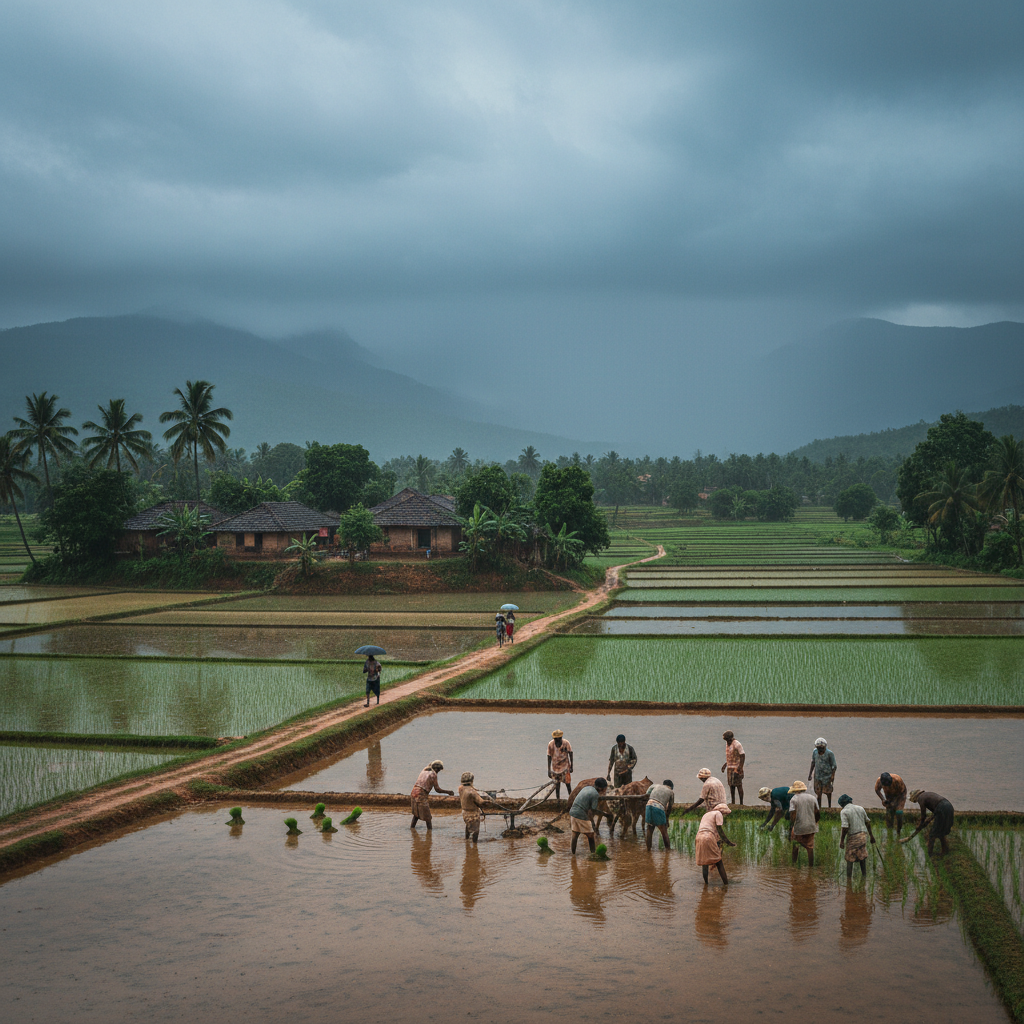
Agriculture is the most impacted sector. About 60% of India’s agricultural land is rain-fed, making the monsoon critical for crop production. The timely arrival, distribution, and intensity of rainfall determine the success of the kharif crops (grown during the monsoon season), including rice, maize, and pulses. It also influences the rabi crops (grown in winter), as the monsoon replenishes water resources.
Economy
The monsoon directly influences the Indian economy. Good monsoon seasons lead to higher agricultural output, boosting rural incomes and overall economic growth. Poor monsoons can lead to droughts, crop failures, and inflation, affecting the entire economy. It also impacts industries that rely on agriculture, such as textiles and food processing.
Water Resources
The monsoon is the primary source of water for rivers, lakes, and groundwater recharge in India. It replenishes reservoirs used for irrigation, drinking water, and hydropower generation. The monsoon’s impact extends to the management of water resources, including dams, canals, and irrigation systems.
Society and Culture
The monsoon deeply influences Indian culture and traditions. Festivals and celebrations often revolve around the monsoon, such as the Onam festival in Kerala and Teej in Rajasthan. The monsoon also impacts people’s lifestyles, including clothing, food habits, and travel patterns.
Monsoon Variability and Climate Change
Monsoon variability refers to fluctuations in the timing, intensity, and distribution of rainfall. Climate change is a significant factor in understanding these variations.
Changing Rainfall Patterns
Climate change is altering the monsoon’s behavior. There’s a trend of increased variability, with more frequent extreme events such as heavy rainfall spells and prolonged dry periods. Some regions are experiencing increased rainfall, while others are facing droughts.
Impact of Global Warming
Global warming contributes to the changes in the monsoon. Rising temperatures can alter atmospheric circulation patterns, intensify the hydrological cycle, and affect sea surface temperatures. These factors influence the monsoon’s onset, duration, and intensity.
Consequences of Variability
The consequences of monsoon variability include increased risks of floods, droughts, and crop failures. It can also lead to water scarcity, displacement, and economic losses. This underscores the need for effective climate change adaptation and mitigation strategies.
Mitigation and Adaptation Strategies
To cope with the challenges posed by monsoon variability and climate change, several mitigation and adaptation strategies are being implemented.
Water Management
Efficient water management is essential. This includes improving irrigation infrastructure, promoting water conservation techniques, and rainwater harvesting. Improving water use efficiency in agriculture, industry, and households is critical.
Climate-Resilient Agriculture
Developing climate-resilient agriculture practices is crucial. This includes using drought-resistant crops, diversifying cropping patterns, and improving soil health. Providing farmers with timely weather information and access to credit and insurance is also important.
Early Warning Systems
Strengthening early warning systems for floods and droughts is critical. This involves improving weather forecasting, monitoring systems, and disaster preparedness. Early warnings help communities and authorities to take preventive measures and reduce the impact of extreme weather events.
Policy and Governance
Implementing effective policies and governance mechanisms is important. This includes promoting sustainable land use practices, regulating water resources, and investing in climate change research and adaptation programs. International cooperation and knowledge sharing are also important aspects.
The Future of the Monsoon
Predicting the exact future of the Indian monsoon is challenging, but some trends are emerging. Climate models suggest that the monsoon may become more erratic in the coming decades, with increased rainfall intensity in some areas and decreased rainfall in others. The frequency of extreme weather events, such as floods and droughts, is expected to increase.
This evolving scenario requires proactive measures. India needs to strengthen its adaptive capacity, invest in climate-resilient infrastructure, and promote sustainable development practices. Continued research and monitoring of the monsoon system are crucial for understanding its complexities and developing effective strategies.
Lesser-Known Facts and Misconceptions
Let’s debunk some myths and bring forth some lesser-known facts about the Indian monsoon.
- The Monsoon’s Geographic Reach: While we often focus on the Indian subcontinent, the monsoon system’s influence extends far beyond India. It significantly impacts weather patterns in neighboring countries like Bangladesh, Nepal, and Myanmar, and even affects the climate of parts of East Africa.
- The “Burst” Myth: The term “burst of the monsoon” is often used to describe the sudden onset of heavy rainfall. However, this is a simplification. The monsoon arrives gradually, and its progress can vary.
- Monsoon and Pollution: What many people overlook is that the monsoon season can sometimes act as a natural cleanser, washing away pollutants from the air. The heavy rainfall helps to clear the air, improving air quality in some regions. However, this is not a complete solution, as the monsoon can also wash pollutants into water bodies.
- El Niño and the Monsoon: A common misconception is that El Niño always causes a weak monsoon. While El Niño events often correlate with a weaker monsoon, this isn’t always the case. Other factors, like the IOD, can influence the monsoon’s strength, even during an El Niño year.
The Monsoon in the Modern Context (2025-2026)
In 2025-2026, the Indian monsoon continues to be a central topic of discussion. The National Monsoon Mission, launched by the Indian government, is working to improve weather forecasting accuracy and enhance preparedness. Technological advancements, such as sophisticated weather models and satellite data analysis, are playing a key role.
The deeper impact becomes visible when we consider the economic and social implications. Farmers are increasingly adopting climate-smart agricultural techniques, and governments are focusing on water conservation and disaster management. Awareness about climate change and its impact on the monsoon is growing, leading to more sustainable practices and policies.
The integration of technologies like edge computing could revolutionize how we monitor and predict the monsoon. Beyond the Hype: How Edge Computing is Quietly Reshaping Our World in 2026 provides insights into how real-time data processing closer to the source can improve the accuracy of weather forecasts and help in disaster management.
India is also collaborating with international organizations and research institutions to improve monsoon understanding and response. Climate change adaptation and mitigation remain crucial components of national and global strategies.
FAQ Section
Here are some frequently asked questions about the Indian monsoon:
- What causes the Indian monsoon?
The Indian monsoon is primarily caused by the differential heating of the land and sea, the influence of the Himalayas and the Tibetan Plateau, and the interaction of jet streams and oceanic phenomena like the ENSO and IOD.
- When does the Indian monsoon typically arrive?
The southwest monsoon typically arrives in Kerala around June 1st. It then progresses across the country over the following weeks, reaching different regions at varying times.
- What are the two types of monsoons in India?
The two types of monsoons are the southwest monsoon (summer monsoon) and the northeast monsoon (winter monsoon). The southwest monsoon brings most of the rainfall to India, while the northeast monsoon brings rainfall to the southern states.
- How does the monsoon affect agriculture?
The monsoon is crucial for agriculture, as it provides water for irrigation and replenishes water resources. The timing, amount, and distribution of rainfall during the monsoon significantly impact crop yields, influencing food security.
- What is the role of El Niño in the Indian monsoon?
El Niño events often lead to weaker monsoons, but it’s not a direct cause-and-effect relationship. The impact of El Niño on the monsoon can vary based on other factors, such as the IOD.
- How is climate change affecting the Indian monsoon?
Climate change is increasing the variability of the monsoon, with more frequent extreme weather events. Rising temperatures and altered atmospheric circulation patterns can change the monsoon’s onset, duration, and intensity, causing floods and droughts.
- What are some adaptation strategies for the monsoon?
Adaptation strategies include efficient water management, climate-resilient agriculture, early warning systems, and effective policy implementation.
The Indian monsoon is a complex and dynamic weather system that plays a pivotal role in shaping India’s climate, economy, and culture. Understanding its intricacies is crucial for managing water resources, mitigating climate change impacts, and ensuring sustainable development.