
Imagine a network of pathways, stretching thousands of miles, pulsating with the energy of merchants, scholars, and adventurers. This wasn’t just a road; it was a cultural conveyor belt, a crucible where civilizations met, mingled, and transformed. I’m talking about the Silk Road, a historical phenomenon that continues to fascinate and influence our world today. What many people overlook is that the Silk Road wasn’t just a single route but a complex web of paths that connected East and West, fostering an exchange of not only goods but also ideas, religions, and technologies.
The Silk Road’s Genesis: A Tapestry of Trade
The Silk Road’s origins can be traced back to the Han Dynasty in China (206 BCE – 220 CE). The Chinese emperors, eager to secure trade routes and expand their influence, initiated diplomatic missions westward. This opened the door for the exchange of silk, a highly prized commodity in the West, for other goods like horses, jade, and precious metals. The demand for silk fueled the growth of the Silk Road, and soon, it extended across Central Asia, through Persia, and into the Mediterranean.
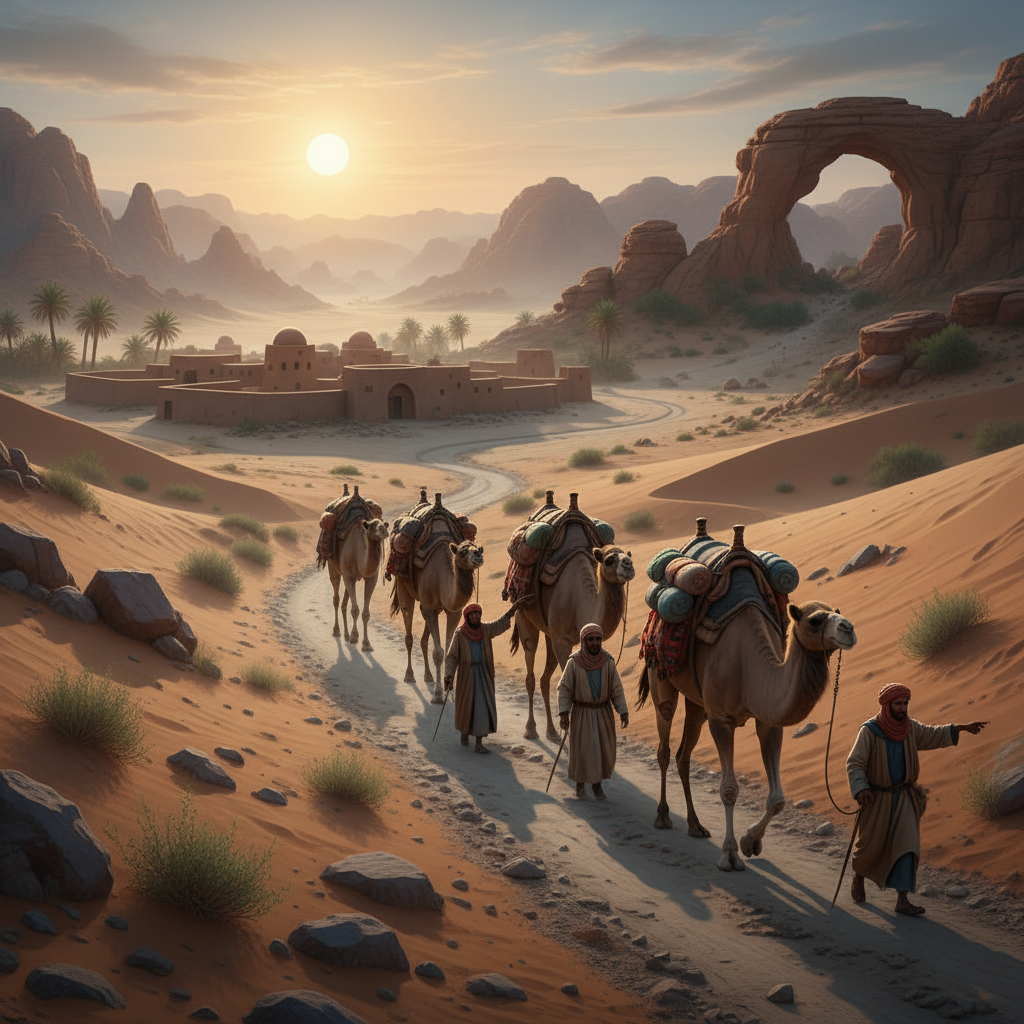
This “road” wasn’t a paved highway. Instead, it comprised various routes, traversing mountains, deserts, and seas. The Silk Road’s main arteries went through the Tarim Basin, a region of deserts and oases, and connected China with Central Asia. These routes further branched out, reaching the Indian subcontinent and eventually connecting with the sea routes to the Middle East and Europe. The geographical challenges and political landscapes shaped the routes and the flow of trade. The Silk Road wasn’t just about the movement of goods; it was about connecting diverse cultures and economies, laying the groundwork for globalization centuries before the term was even conceived.
Beyond Silk: A Symphony of Exchange
While silk was the star commodity, the Silk Road facilitated the exchange of many other goods. Spices, teas, porcelain, and paper from the East were traded for wool, linen, glass, and precious metals from the West. This exchange significantly impacted the economies of both East and West. The influx of new goods stimulated production, created new markets, and spurred economic growth. Moreover, the exchange wasn’t limited to material goods. The Silk Road acted as a conduit for ideas, religions, and technologies.
Buddhism, originating in India, spread eastward along the Silk Road, transforming cultures in China, Korea, and Japan. The transmission of Buddhist art, architecture, and philosophy influenced the artistic and intellectual landscapes of the East. Simultaneously, Western scientific knowledge, such as astronomy and mathematics, made its way eastward, enriching intellectual pursuits. The Silk Road also played a crucial role in the dissemination of technology. For instance, the invention of printing and gunpowder in China eventually made their way to Europe, revolutionizing warfare and the spread of knowledge.
The Rise and Fall of Empires: Silk Road’s Intertwined History
The Silk Road’s fate was closely linked to the rise and fall of empires. The Han Dynasty’s stability and expansion in China provided a conducive environment for trade. Similarly, the Roman Empire’s control over the Mediterranean and parts of the Middle East created a stable market for Eastern goods. However, the Silk Road faced interruptions due to political instability, wars, and invasions. The rise of the nomadic empires in Central Asia, like the Huns and the Mongols, often disrupted trade routes. Yet, these disruptions also presented new opportunities. The Mongol Empire, for instance, unified much of Eurasia in the 13th and 14th centuries and re-established safe passage for merchants, leading to a resurgence of trade and cultural exchange.
The decline of the Silk Road was a gradual process. The discovery of sea routes by European explorers, particularly the Portuguese, opened up direct access to the East, bypassing the land-based routes. The Age of Exploration and the subsequent rise of maritime trade slowly shifted the focus from the Silk Road to the oceans. However, the legacy of the Silk Road persisted, influencing trade patterns, cultural exchanges, and the interconnectedness of the world.
Cultural Cross-Pollination: A Legacy of Diversity
The Silk Road was more than a trade route; it was a cultural melting pot where different civilizations met, interacted, and influenced each other. The Silk Road’s influence on art and architecture is evident in the fusion of styles found along its routes. The development of distinct artistic styles, blending Eastern and Western influences, can be observed in various regions along the Silk Road, from Central Asia to China. The Silk Road also facilitated the spread of religions, including Buddhism, Christianity, and Islam, leading to the establishment of diverse religious communities along the trade routes.
The Silk Road wasn’t just about goods; it facilitated a vibrant exchange of ideas. Philosophies, scientific knowledge, and artistic styles moved along the Silk Road, influencing the intellectual and cultural landscapes of various regions. The spread of knowledge through the Silk Road contributed to the development of new artistic styles and intellectual frameworks. The stories, music, and dance traditions also traveled, enriching the cultural fabric of the interconnected communities.
Modern Echoes: The Silk Road Today
The legacy of the Silk Road is still relevant in the 21st century. The concept of interconnectedness and cultural exchange continues to shape our world. The modern-day Silk Road initiatives, such as China’s Belt and Road Initiative (BRI), aim to revive the historical trade routes and enhance economic cooperation. The BRI involves building infrastructure projects, including railways, roads, and ports, to facilitate trade and investment across Asia, Africa, and Europe. This initiative has sparked debates about its economic and geopolitical implications, highlighting the enduring relevance of the Silk Road’s historical role.
The study of the Silk Road provides valuable insights into the dynamics of globalization. The Silk Road’s historical context can help us understand the complexities of international trade, cultural exchange, and the impact of connectivity on societies. By analyzing the Silk Road’s history, we can gain a broader understanding of the factors that have shaped our interconnected world. The Silk Road reminds us that cultural exchange and economic cooperation have always been critical drivers of human progress.
Lesser-Known Facts and Misconceptions
One common misconception is that the Silk Road was a single, well-defined route. In reality, it was a complex network of routes that changed over time. Furthermore, while silk was a primary commodity, the Silk Road facilitated the exchange of various goods, ideas, and technologies. Many people often overlook the role of intermediaries, such as the Sogdians, who were instrumental in facilitating trade and cultural exchange along the Silk Road. They were skilled merchants and interpreters who played a vital role in connecting the East and the West. This often-overlooked aspect of the Silk Road highlights the critical role of cultural brokers in shaping historical interactions.
Another often-misunderstood aspect is the Silk Road’s impact on the spread of diseases. While the Silk Road facilitated trade and cultural exchange, it also served as a conduit for the transmission of diseases. The Black Death, which devastated Europe in the 14th century, is believed to have spread from Central Asia along the Silk Road. This reminds us of the interconnectedness of our world and the impact of trade on human health.
The Silk Road’s Enduring Lessons
The Silk Road’s story teaches us the importance of cultural exchange, economic cooperation, and the interconnectedness of the world. It reminds us that progress is often the result of interaction and exchange between diverse cultures. The Silk Road provides a powerful historical case study for understanding the dynamics of globalization, the impact of trade on societies, and the role of cultural exchange in shaping human history. The Silk Road’s history reveals the cyclical nature of globalization, with periods of integration followed by disruptions and changes.
The Silk Road’s history remains a powerful reminder of how human ingenuity, adaptability, and the desire for exchange have shaped our world. The Silk Road’s legacy continues to influence our world, from international trade and cultural exchange to diplomacy and understanding of history. The Silk Road’s lessons are particularly relevant in the 21st century as we navigate the complexities of globalization, cultural diversity, and international relations. The Silk Road, therefore, offers a valuable framework for understanding how different cultures and communities can interact and thrive together.
Connecting Past and Present: Why This Knowledge Matters
Understanding the Silk Road helps us appreciate the historical roots of globalization. It provides context for the current globalized world by showing how interconnectedness is not a new phenomenon. It’s crucial for understanding the historical dynamics of trade, cultural exchange, and the spread of ideas and technologies. For students of history, this knowledge offers a deeper understanding of major historical events and their causes.
The Silk Road’s legacy continues to influence international relations and economic policies. Knowledge of this helps one to understand current events, particularly those related to trade, infrastructure, and cultural diplomacy. The study of the Silk Road fosters cross-cultural understanding and appreciation. In an increasingly globalized world, this understanding is vital for effective communication and collaboration. The Silk Road’s history can influence personal and professional development in ways that build a sense of awareness and respect for the diversity of our world.
The Future of the Silk Road Legacy
The Silk Road’s legacy is far from over. The ongoing infrastructure projects and initiatives like the Belt and Road Initiative signal a continued focus on trade, connectivity, and cultural exchange. Technological advancements will likely transform how we interact and trade. Innovations in transportation and communication will continue to influence global trade. Policy changes, such as trade agreements and diplomatic efforts, will impact the development of trade routes and cultural exchange programs.
The Silk Road’s future lies in its ability to adapt to new challenges and opportunities. The lessons from the past will be crucial for navigating the future of globalization. The Silk Road’s legacy will continue to influence our world for many years to come, offering opportunities for global cooperation, economic development, and cultural enrichment.
Frequently Asked Questions (FAQ)
1. What was the main purpose of the Silk Road?
The main purpose was to facilitate trade between the East and the West, exchanging goods like silk, spices, and precious metals, and ideas, religions, and technologies.
2. Which countries and regions were connected by the Silk Road?
The Silk Road connected China, Central Asia, the Middle East, the Mediterranean, and eventually Europe, encompassing a vast network of routes and diverse cultures.
3. What were the major goods traded on the Silk Road?
Silk, spices, tea, porcelain, paper, wool, linen, glass, and precious metals were among the major goods exchanged.
4. How did the Silk Road impact cultural exchange?
It facilitated the spread of religions like Buddhism, art, architecture, and technology transfer, leading to cultural fusion and exchange.
5. What role did the Mongol Empire play in the Silk Road?
The Mongol Empire unified much of Eurasia, re-establishing safe passage for merchants, leading to a resurgence of trade and cultural exchange.
6. What is the Belt and Road Initiative (BRI)?
The BRI is a modern initiative by China to revive historical trade routes through infrastructure projects, enhancing economic cooperation across Asia, Africa, and Europe.
7. Why is the Silk Road relevant today?
It helps us understand the historical roots of globalization, the dynamics of trade, cultural exchange, and the spread of ideas and technologies, which are all still relevant today.
8. What is the best way to understand the Silk Road?
By studying its historical context, one can gain valuable insights into the dynamics of international trade, cultural exchange, and the impact of connectivity on societies.
The Silk Road’s story continues to unfold, showing the power of human connection across borders and cultures.
If you’re interested in learning more about building a career, you may find the following article useful: The Quarter-Life Crisis Trap: How to Build a Career That Actually Lasts (Instead of Burning Out). For more information, visit Infosprout.