The Indian economy is at an interesting juncture as we move into 2026. After navigating a period of global economic volatility, India has demonstrated resilience, achieving a GDP growth of approximately 7.4% in FY26. This growth, however, is not without its complexities. A closer look reveals a landscape shaped by both significant opportunities and considerable challenges.
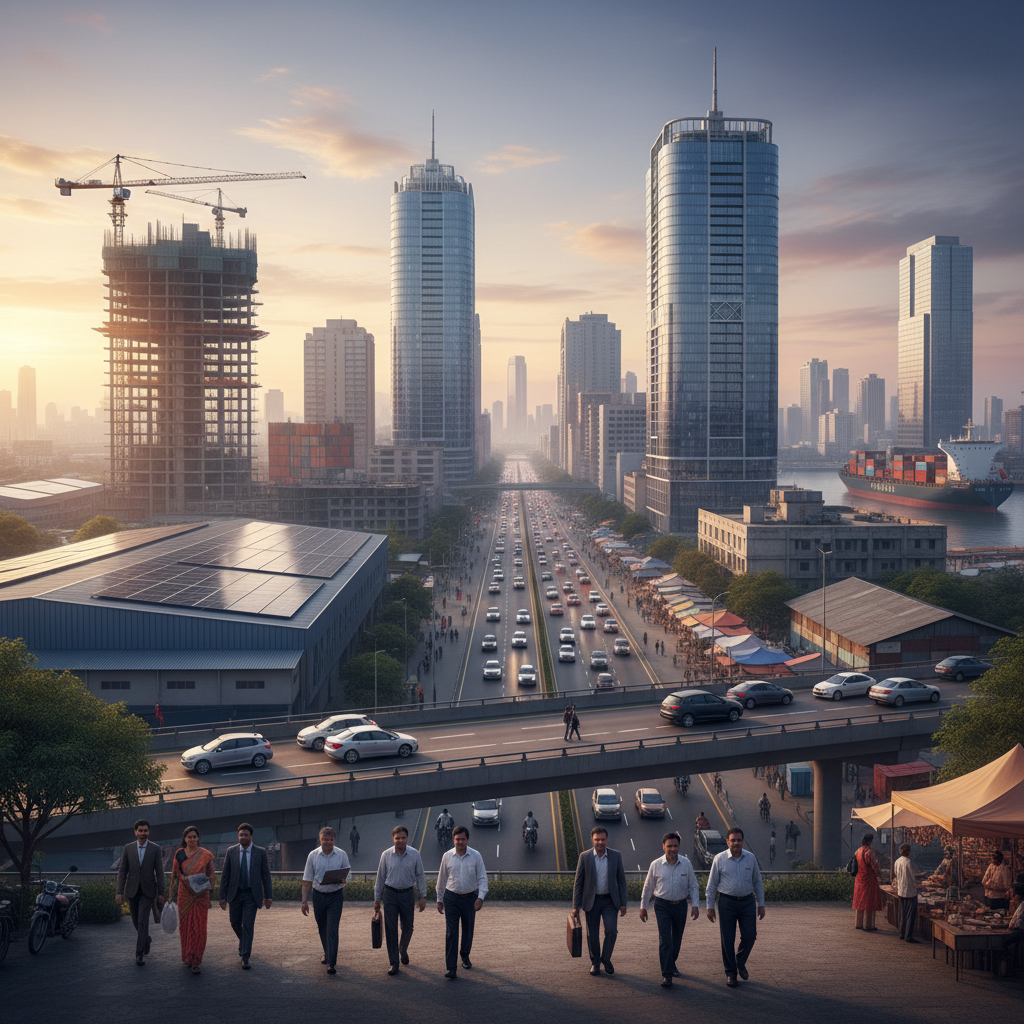
The Current Economic Climate: A Snapshot
India’s economic story in 2026 is one of steady growth supported by a few key factors. These include:
* **Low Inflation:** Headline Consumer Price Index (CPI) inflation has remained relatively low, averaging around 1.7% from April to December 2025. While external projections suggest a slight increase, the Reserve Bank of India (RBI) anticipates inflation to stay within its target band of 4% ± 2%.
* **Strong Consumption:** Private consumption continues to be a major driver, accounting for over 60% of the GDP.
* **Investment Uptick:** Both private initiatives and public capital expenditure are contributing to an increase in investment activity.
* **Sectoral Growth:** The services sector is growing strongly, with manufacturing also showing positive trends.
The Reserve Bank of India (RBI) has responded to these positive indicators by cutting interest rates, a move designed to encourage business expansion and investment.
Key Drivers of Economic Growth
Several sectors are crucial to India’s economic performance:
* **Services Sector:** This sector, encompassing IT, finance, healthcare, and education, contributes the largest share to the GDP, around 55%.
* **Industry:** Manufacturing, construction, and mining are vital for job creation and export growth, contributing around 25-30% to the GDP.
* **Agriculture:** Though its share of the GDP has decreased, agriculture remains important for employment, supporting nearly 45% of the workforce.
Globalization’s Impact on India
Globalization has significantly reshaped the Indian economy since the economic liberalization of 1991. The opening up of the Indian market has led to increased foreign investment, technological advancements, and access to global markets. This has resulted in accelerated economic growth and stronger foreign exchange reserves. The service sector, in particular, has seen substantial growth, fueled by access to modern technologies. However, globalization has also brought challenges, including increased competition and the potential for a widening gap between different segments of society.
Challenges Facing the Indian Economy in 2026
Despite the positive outlook, India faces several challenges:
* **External Risks:** These include potential US tariff policies and uncertainties in the India-US trade deal, as well as the impact of China’s economic recovery.
* **Trade Uncertainties:** Global disruptions and potential export headwinds could test India’s economic resilience.
* **Weakening Rupee:** The Indian rupee has faced pressure, affecting household and corporate budgets.
* **Skill Gaps:** Structural skill gaps continue to be a concern, impacting employment and productivity.
* **Investment Hesitancy:** Private investment remains cautious, which could affect economic momentum.
The Role of Government Initiatives
The Indian government is actively pursuing various initiatives to foster economic growth:
* **Renewable Energy:** The government aims to produce 500 GW of renewable energy by 2030, with various schemes and incentives supporting this goal.
* **Manufacturing:** Initiatives like “Make in India” and Production Linked Incentive (PLI) schemes are aimed at boosting the manufacturing sector.
* **Infrastructure Development:** Heavy investments are being made in roads, railways, ports, and energy.
* **Digital Economy:** The adoption of digital payments and platforms like UPI has revolutionized the economy.
The Impact of Climate Change
Climate change poses significant risks to Indian agriculture, affecting crop yields, water resources, and the livelihoods of millions of farmers. Rising temperatures, erratic rainfall, and extreme weather events disrupt farming practices and threaten food security. Studies predict that climate change could reduce the productivity of Indian agriculture by up to 25% by the end of the century without adaptation measures.
The Road Ahead: Policy and Reforms
India’s economic path in 2026 will depend on how effectively the government manages these challenges. Key areas of focus include:
* **Fiscal Policy:** Balancing fiscal sustainability with spending needs will be crucial.
* **Trade Policy:** Recalibrating trade policies to mitigate external risks will be important.
* **Labor Reforms:** Reforms in labor policies will be essential to enhance productivity and competitiveness.
* **Continued Investment:** Encouraging private investment through supportive policies will be key.
The Union Budget 2026 will be critical in setting the direction for economic growth. The focus will be on reviving confidence, easing cost pressures, and boosting employment.
Misconceptions About the Indian Economy
There are common misconceptions about the Indian economy. One is misinterpreting the GDP growth rate. Another is that the IT sector is the primary driver of India’s economic growth, while in reality, its contribution to GDP is relatively small. Manufacturing and other services play a bigger role in creating jobs for millions. Many also mistakenly believe that India is decades behind China, when the economic gap is closer to 12-14 years.
The Good Enough Career: A Relevant Perspective
As India’s economy evolves, understanding the dynamics of career paths is also essential. The concept of “The Good Enough Career,” as explored in articles like “The Good Enough Career: Why Settling Might Be Your Smartest Move,” offers a valuable perspective in navigating the complexities of the job market. With a natural and practical approach, it provides insights into making informed career decisions amidst the changing economic landscape.
Conclusion: Building a Resilient Future
In 2026, India stands at a critical juncture. The country must navigate global uncertainties, address domestic challenges, and capitalize on its strengths. By focusing on reforms, investment, and strategic policies, India can build a resilient economy and achieve sustainable, inclusive growth. The government’s efforts to boost renewable energy and manufacturing, combined with a strong focus on addressing the impacts of climate change, are all vital to this goal. The Indian economy must continue to adapt and evolve to maintain its growth trajectory in a rapidly changing world. For further insights, visit Infosprout.
Frequently Asked Questions (FAQ)
1. **What are the key sectors driving economic growth in India in 2026?**
The key sectors driving economic growth include services (IT, finance, healthcare), industry (manufacturing, construction), and agriculture.
2. **What are the major challenges facing the Indian economy in 2026?**
Major challenges include external risks (US tariffs, China’s recovery), trade uncertainties, a weakening rupee, skill gaps, and hesitant private investment.
3. **How is climate change impacting Indian agriculture?**
Climate change affects Indian agriculture through altered rainfall patterns, extreme weather events, and rising temperatures, which can reduce crop yields and threaten food security.
4. **What role does globalization play in the Indian economy?**
Globalization has increased foreign investment, technological advancements, and access to global markets, leading to economic growth. However, it also brings challenges like increased competition.
5. **What are the government initiatives to boost renewable energy?**
The government promotes renewable energy through schemes like the National Solar Mission, Green Hydrogen Mission, and Green Energy Corridor, aiming for 500 GW of renewable energy capacity by 2030.
6. **What are the common misconceptions about the Indian economy?**
Common misconceptions include misinterpreting GDP growth, and overestimating the role of the IT sector while underestimating the impact of manufacturing.
7. **How has the Indian government responded to the challenges?**
The government has focused on reforms, investment, and strategic policies, including efforts to boost renewable energy and manufacturing, and address the impacts of climate change.
8. **What is the significance of the Union Budget 2026?**
The Union Budget 2026 is critical in setting the direction for economic growth by focusing on reviving confidence, easing cost pressures, and boosting employment.