Ever since I was a kid, I’ve been fascinated by the ‘impossible.’ The idea of things that defy our everyday understanding of reality. That curiosity led me down the rabbit hole of technology, from the clunky computers of my youth to the sleek, powerful devices we have today. Lately, that fascination has re-emerged with quantum computing – a field that, frankly, sounds like science fiction but is rapidly becoming science fact.
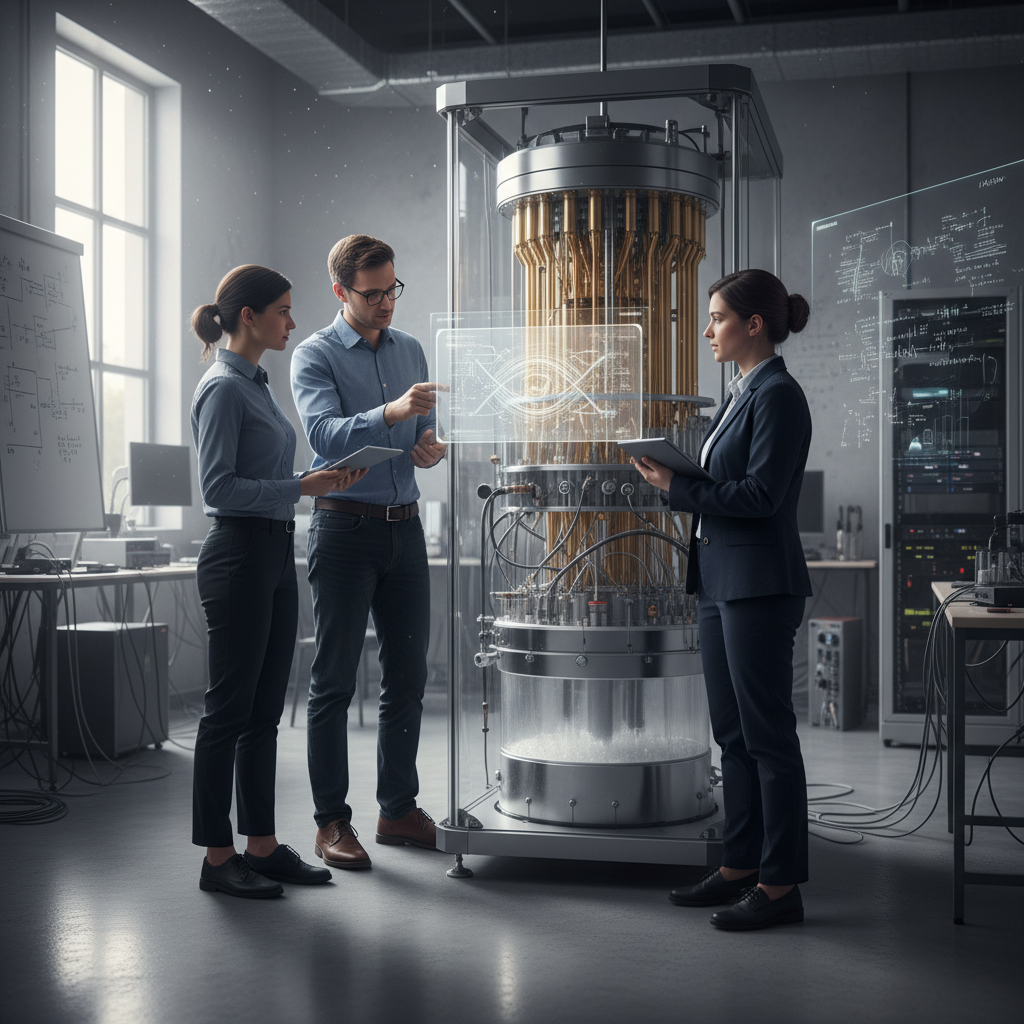
It’s easy to get lost in the jargon, to hear terms like “qubits,” “superposition,” and “entanglement” and feel completely out of your depth. But trust me, you don’t need a PhD in physics to grasp the core concepts and understand why quantum computing is poised to change everything. This isn’t just another tech trend; it’s a fundamental shift in how we approach computation itself.
The Core Idea: Going Beyond Bits
Traditional computers, the ones we use every day, work with bits. A bit is a simple unit of information that can be either a 0 or a 1. Think of it like a light switch: it’s either on or off. These bits are the building blocks of everything we do on our computers, from browsing the internet to creating complex spreadsheets. The power of a computer is determined by the number of bits it can manipulate and the speed at which it can do so.
Quantum computers, on the other hand, use qubits. A qubit is a bit with a twist. It can be a 0, a 1, or, thanks to the mind-bending principles of quantum mechanics, both at the same time. This “both at the same time” state is called superposition. Imagine a coin spinning in the air: it’s neither heads nor tails until it lands. A qubit is like that coin, existing in multiple states simultaneously. This seemingly small difference unlocks an enormous leap in computing power.
Another key concept is entanglement. Entangled qubits are linked together in such a way that they share the same fate. If you measure the state of one entangled qubit, you instantly know the state of the other, no matter how far apart they are. It’s like having two coins that are always perfectly correlated – if one lands heads, the other *must* land tails. Entanglement allows quantum computers to perform calculations in ways that are impossible for classical computers.
To really appreciate the difference, consider a simple task: finding the best route for a delivery truck to visit multiple locations. A classical computer would have to check every possible route, one by one. The more locations, the longer this process takes, growing exponentially. A quantum computer, however, could explore multiple routes simultaneously, potentially finding the optimal solution much faster.
From Theory to Reality: The Evolution of Quantum Computing
The theoretical foundations of quantum computing were laid in the early 1980s by physicists like Paul Benioff and Richard Feynman, who realized that simulating quantum systems with classical computers was incredibly inefficient. But it took decades to translate these ideas into working hardware.
Early quantum computers were experimental devices, often built in university labs. They were prone to errors and could only perform simple calculations. The biggest hurdle was something called decoherence – the tendency of qubits to lose their quantum properties and revert to classical states. Maintaining the delicate quantum state of qubits requires extremely controlled environments, often involving super-cooled temperatures and isolation from external interference.
Over the past decade, however, there has been an explosion of progress. Companies like Google, IBM, and Microsoft have invested billions in quantum computing research and development. We’ve seen the creation of more stable qubits, the development of more sophisticated quantum algorithms, and the construction of increasingly powerful quantum computers. While we’re still a long way from a fully fault-tolerant, general-purpose quantum computer, the pace of innovation is accelerating.
Understanding the Practical Applications
So, what can quantum computers *actually* do? The potential applications are vast and span many industries:
- Drug Discovery and Materials Science: Quantum computers can simulate the behavior of molecules with incredible accuracy. This allows researchers to design new drugs and materials with unprecedented precision. Imagine being able to model the complex interactions of a new drug within the human body *before* it’s even synthesized.
- Financial Modeling: Quantum computers can optimize complex financial models, such as portfolio optimization, fraud detection, and risk analysis. This could lead to more efficient markets and better investment strategies.
- Artificial Intelligence: Quantum computers can accelerate machine learning algorithms, allowing for faster training of AI models and the development of more sophisticated AI systems.
- Cryptography: Quantum computers pose a threat to existing encryption methods, but they also offer the potential for unbreakable quantum cryptography, securing our data in ways we can’t imagine today.
- Logistics and Optimization: As mentioned earlier, quantum computers excel at solving complex optimization problems. This can revolutionize areas like supply chain management, transportation, and resource allocation.
The real impact becomes visible when you consider how these advancements translate into tangible benefits. For example, in the pharmaceutical industry, quantum computing could dramatically reduce the time and cost of drug development, bringing life-saving medications to market faster. In finance, it could help protect against cyber threats and create more stable economic systems.
Common Misunderstandings and Busting the Myths
As with any cutting-edge technology, there are plenty of misconceptions surrounding quantum computing. Let’s clear up some of the most common ones:
- Myth: Quantum computers will replace all classical computers overnight.
- Reality: Quantum computers are not meant to replace classical computers entirely. They are specialized machines that will be used for specific tasks where they offer a significant advantage. Classical computers will continue to be essential for everyday computing.
- Myth: Quantum computers can solve any problem.
- Reality: Quantum computers excel at certain types of problems, particularly those involving optimization, simulation, and complex calculations. They are not a magic bullet.
- Myth: Quantum computers are immune to errors.
- Reality: Qubits are extremely fragile and prone to errors. Building fault-tolerant quantum computers is one of the biggest challenges facing the field.
- Myth: Quantum computing is only for tech giants and governments.
- Reality: While the initial investment in quantum computing is high, access to quantum computers is becoming more democratized. Cloud-based quantum computing services are now available, allowing researchers, businesses, and even individuals to experiment with quantum algorithms.
The Road Ahead: Innovation, Regulation, and Adoption
The future of quantum computing is bright, but there are still significant challenges to overcome. Here are some key areas to watch:
- Hardware advancements: Researchers are working to build more stable, scalable, and fault-tolerant qubits. Different qubit technologies (superconducting, trapped ions, photonic) are vying for dominance, each with its own advantages and disadvantages.
- Algorithm development: New quantum algorithms are constantly being developed to solve specific problems. The creation of practical, efficient quantum algorithms is crucial to unlocking the full potential of quantum computers.
- Software and cloud platforms: As quantum computers become more accessible, the development of user-friendly software and cloud platforms will be essential. This will allow researchers and businesses to easily access and utilize quantum computing resources.
- Regulation and ethics: The power of quantum computers raises important ethical and regulatory considerations, particularly in the areas of cryptography and cybersecurity. Governments and organizations will need to develop frameworks to address these concerns.
- Workforce development: The quantum computing field needs skilled professionals – physicists, computer scientists, engineers, and mathematicians – to drive innovation. Educational programs and training initiatives are essential to build a workforce ready for the quantum era.
We are still in the early stages of the quantum revolution, but the potential is undeniable. This is a field that will require collaboration between academia, industry, and government.
Real-World Examples of Quantum Computing in Action (or Close To It)
While fully-fledged, commercially available quantum computers are still emerging, there are already some exciting examples of how this technology is beginning to take shape. These instances aren’t necessarily running on “true” quantum computers in the most powerful sense yet, but they leverage quantum principles and offer a glimpse of the future:
- Optimizing Logistics for Delivery Services: Companies are experimenting with quantum-inspired algorithms (algorithms that use techniques borrowed from quantum computing) to optimize delivery routes, reduce fuel consumption, and improve overall logistics efficiency. This is a clear demonstration of the immediate practical value, even without fully realized quantum computers.
- Drug Discovery and Development: Pharmaceutical companies are using quantum computing and simulation software to model the interaction of drug molecules with proteins in the human body. This is used to speed up the process of identifying potential drug candidates and improving their effectiveness.
- Financial Modeling and Risk Assessment: Financial institutions are exploring the use of quantum-inspired algorithms to improve portfolio optimization, detect fraud, and manage risk more effectively.
Frequently Asked Questions About Quantum Computing
Here are some of the most common questions people have about quantum computing:
- How far away are we from widespread quantum computing?
While we are not at the point of having quantum computers on every desk, the field is rapidly advancing. Cloud-based quantum computing services are becoming more accessible, and quantum-inspired algorithms are already making an impact. Widespread use is likely still a decade or more away, but the progress is exciting. - Will quantum computers break all encryption?
Yes, quantum computers pose a significant threat to many of the encryption methods used today, such as RSA and ECC. However, research is underway to develop “quantum-resistant” encryption algorithms that are secure against attacks from quantum computers. - Are quantum computers better than regular computers?
Quantum computers are not necessarily “better” than regular computers in all aspects. They are designed to tackle very specific problems more efficiently than classical computers. They are not meant to replace everyday devices like smartphones or laptops. - Can I experiment with quantum computing now?
Yes! Several companies offer cloud-based quantum computing services, which allow you to experiment with quantum algorithms and run simulations on real quantum hardware. This is a great way to learn more about the field. - What kind of jobs will be available in the quantum computing field?
The quantum computing field will create jobs for physicists, computer scientists, mathematicians, engineers, and other specialists. There will be opportunities in hardware development, algorithm design, software engineering, and application development. - How expensive is a quantum computer?
Quantum computers are currently extremely expensive, costing millions of dollars to build and maintain. However, as the technology matures and becomes more widely adopted, the cost is likely to decrease. - What is the biggest challenge in quantum computing?
One of the biggest challenges is building stable, scalable, and fault-tolerant qubits. Maintaining the delicate quantum states of qubits is incredibly difficult and requires highly controlled environments.
Quantum computing is more than just a tech trend; it’s a paradigm shift. Its implications are profound, touching nearly every sector of society. While the path to widespread adoption is filled with challenges, the potential rewards – from revolutionary medical breakthroughs to a more secure and efficient digital world – are too significant to ignore. As a senior tech analyst, I can tell you that staying informed about quantum computing isn’t just a good idea; it’s essential for anyone who wants to understand the future of technology. You might even say that the future is already here, just unevenly distributed, and quantum computing is a leading example of this phenomenon.
If you’re interested in other ways that the technology landscape is changing, consider taking a look at the impact of rapid technological advancement on your career as a way to understand the wider context.